Question

In: Finance

Suppose you purchase 900 shares of stock at $74 per share with an initial cash investment...

Suppose you purchase 900 shares of stock at $74 per share with an initial cash investment of $33,300. The call money rate is 5 percent and you are charged a 1.5 percent premium over this rate. Ignore dividends.

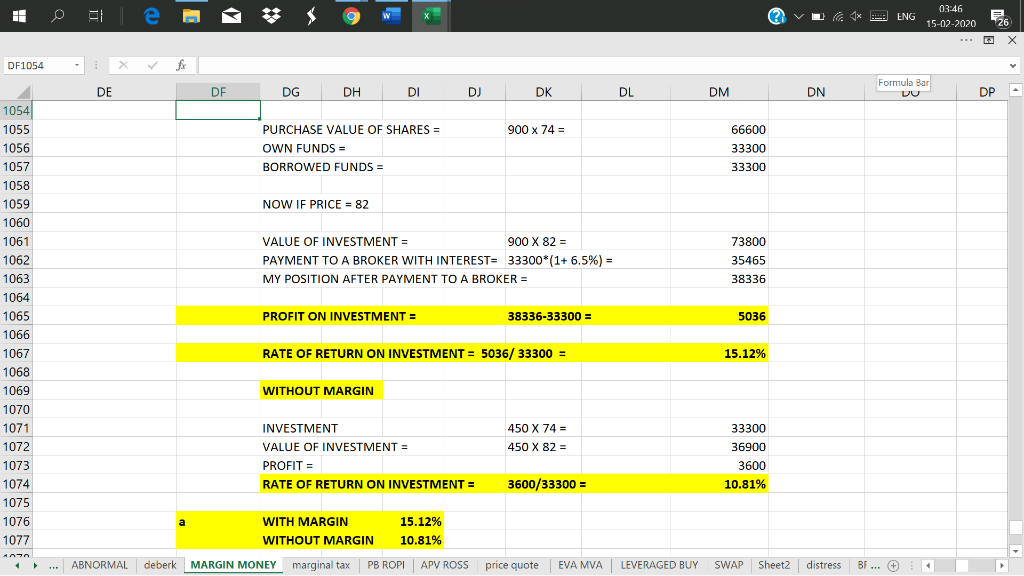
a. Calculate your return on investment one year later if the share price is $82. Suppose instead you had simply purchased $33,300 of stock with no margin. What would your rate of return have been now? (Do not round intermediate calculations. Enter your answers as a percent rounded to 2 decimal places.)

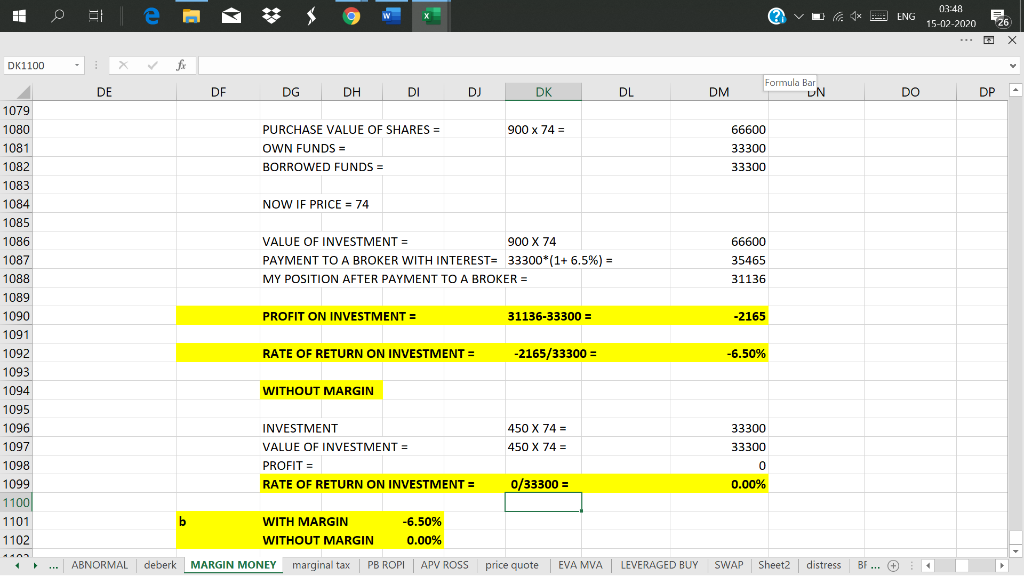
b. Calculate your return on investment one year later if the share price is $74. Suppose instead you had simply purchased $33,300 of stock with no margin. What would your rate of return have been now? (A negative value should be indicated by a minus sign. Do not round intermediate calculations. Enter your answers as a percent rounded to 2 decimal places.)

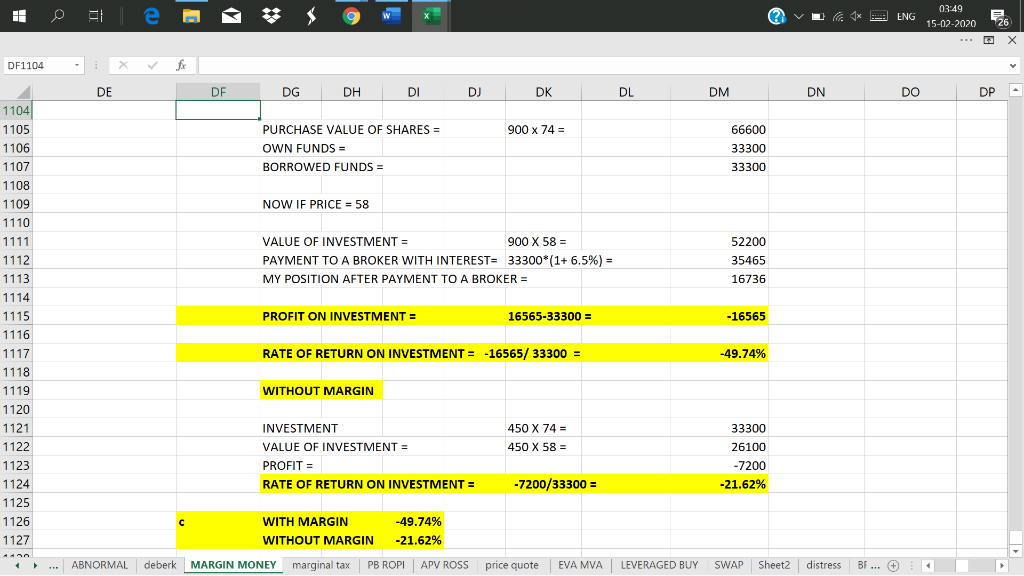
c. Calculate your return on investment one year later if the share price is $58. Suppose instead you had simply purchased $33,300 of stock with no margin. What would your rate of return have been now? (A negative value should be indicated by a minus sign. Do not round intermediate calculations. Enter your answers as a percent rounded to 2 decimal places.)

Solutions
Expert Solution


Related Solutions

Suppose you purchase 520 shares of stock at $81 per share with an initial cash investment...
Suppose you purchase 520 shares of stock at $81 per share with an initial cash investment of $29,000. If your broker requires a maintenance margin of 35 percent, at what share price will you be subject to a margin call?
Suppose you purchase 1,350 shares of stock at $36 per share with an initial cash investment...
Suppose you purchase 1,350 shares of stock at $36 per share with an initial cash investment of $24,300. The call money rate is 5 percent and you are charged a 1.5 percent premium over this rate. Ignore dividends. a. Calculate your return on investment one year later if the share price is $44. Suppose instead you had simply purchased $24,300 of stock with no margin. What would your rate of return have been now? (Do not round intermediate calculations. Enter...
Suppose you bought 100 shares of stock at an initial price of $37 per share. The...
Suppose you bought 100 shares of stock at an initial price of $37 per share. The stock paid a dividend of $0.28 per share during the following year, and the share price at the end of the year was $41. (1) What is your total dollar return on this investment? (2) What is the percentage return on the investment?
Suppose you bought 550 shares of stock at an initial price of $50 per share. The...
Suppose you bought 550 shares of stock at an initial price of $50 per share. The stock paid a dividend of $0.54 per share during the following year, and the share price at the end of the year was $45. a. Compute your total dollar return on this investment. (A negative value should be indicated by a minus sign.) b. What is the capital gains yield? (A negative value should be indicated by a minus sign. Do not round intermediate...
Suppose you know that a company’s stock currently sells for $74 per share and the required...
Suppose you know that a company’s stock currently sells for $74 per share and the required return on the stock is 9.9 percent. You also know that the total return on the stock is evenly divided between a capital gains yield and a dividend yield. It's the company’s policy to maintain a constant growth rate in its dividends. What is the current dividend per share? (Do not round intermediate calculations and round your answer to 2 decimal places, e.g., 32.16.)...
You execute a margin purchase of 200 shares of a stock at $52 per share. The...
You execute a margin purchase of 200 shares of a stock at $52 per share. The initial margin requirement is 60% and the maintenance margin is 35%.      a.    On a per share basis, what is the minimum amount you must you put up and how much can you borrow from the brokerage house?      b.    If the price of the stock increases to $64 per share, what is the actual margin in your account? Assume you borrowed the...
Suppose that XTel currently is selling at $50 per share. You buy 900 shares using $36,000...
Suppose that XTel currently is selling at $50 per share. You buy 900 shares using $36,000 of your own money, borrowing the remainder of the purchase price from your broker. The rate on the margin loan is 9%. a. What is the percentage increase in the net worth of your brokerage account if the price of XTel immediately changes to (a) $56; (b) $50; (c) $44? (Leave no cells blank - be certain to enter "0" wherever required. Negative values...
You purchase 43 shares of General Motors stock at $35.9 per share. Additionally, you purchase 23...
You purchase 43 shares of General Motors stock at $35.9 per share. Additionally, you purchase 23 shares of Ford for $112.5 and 48 shares of Fiat for $131.8 each. What is your portfolio weight for GM? (Enter your response as a percentage with two decimal places, ex: 12.34)
You purchase 500 shares of Johns Incorporated at $50 per share using an initial margin of...
You purchase 500 shares of Johns Incorporated at $50 per share using an initial margin of 60%. Your maintenance margin is 25% and the minimum initial margin is 50%. A.   How low can the stock price fall before you receive a margin call? B.   If the stock price falls to $21 a share, how much additional equity must you add to your account?
Part A: You make a cash purchase of 100 shares of a stock at $55 per...
Part A: You make a cash purchase of 100 shares of a stock at $55 per share. You hold the stock for one year, during which dividends of $5 a share are distributed. Commissions are 2 percent of the value of a purchase or sale. Assume all of the same conditions of the transaction as in part a (i.e. stock purchase price, dividends, commission) but now you make the purchase using margin. If the Margin Requirement is 60% and the...
ADVERTISEMENT
ADVERTISEMENT
ADVERTISEMENT