Question
In: Math
When σ is unknown and the sample is of size n ≥ 30, there are two...
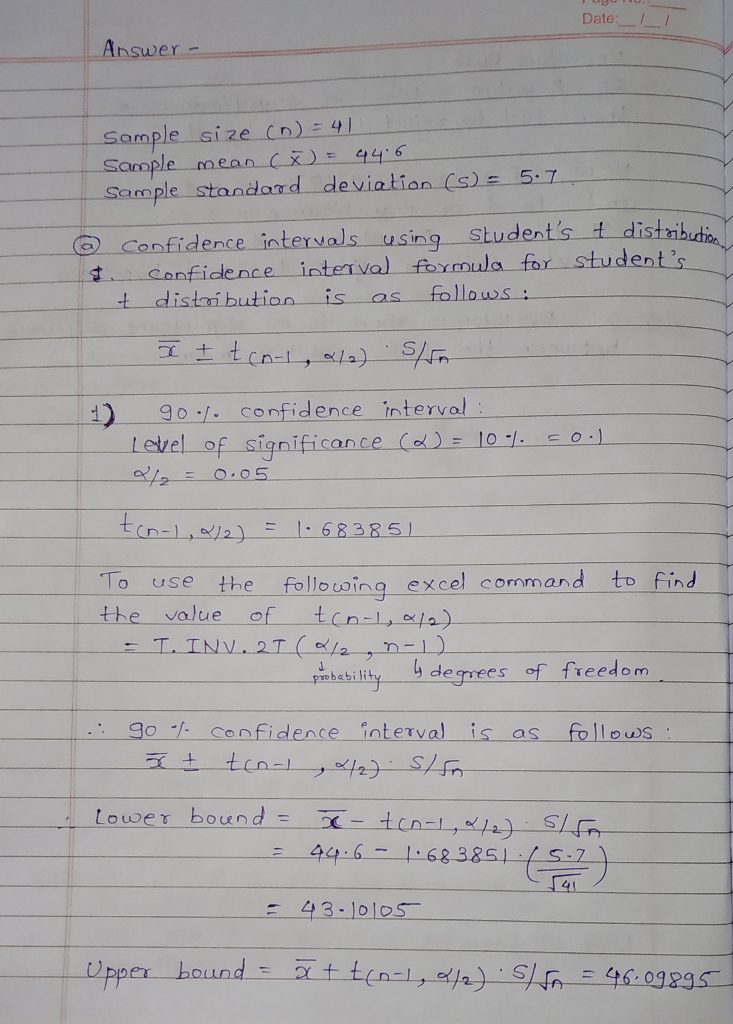
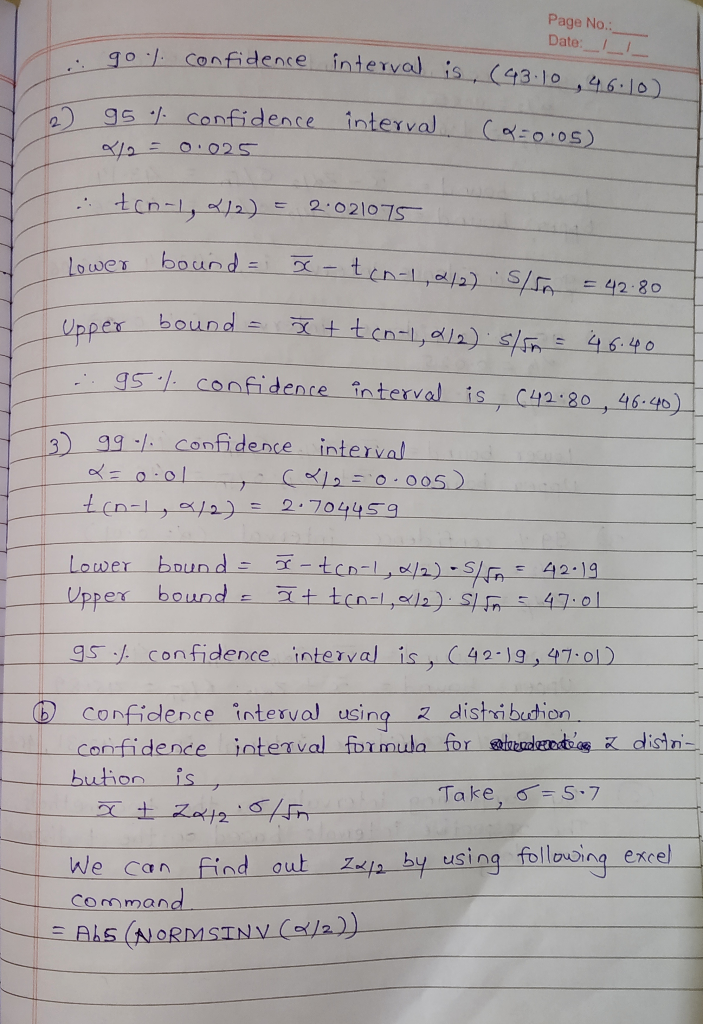
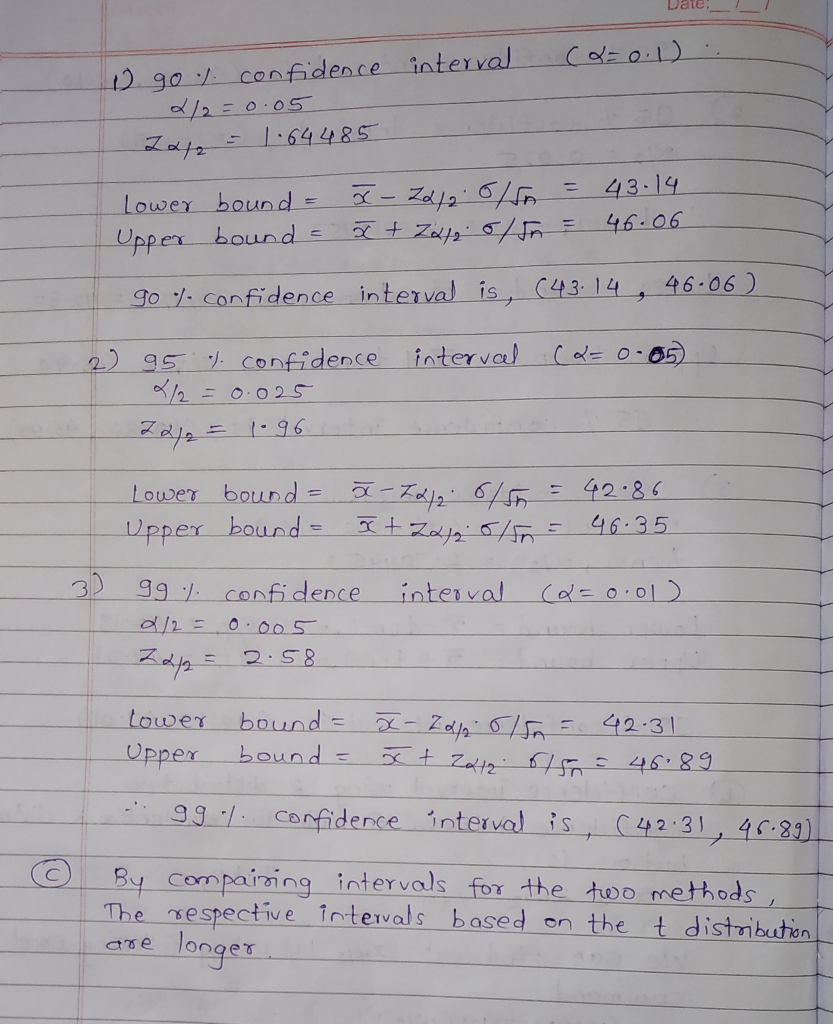
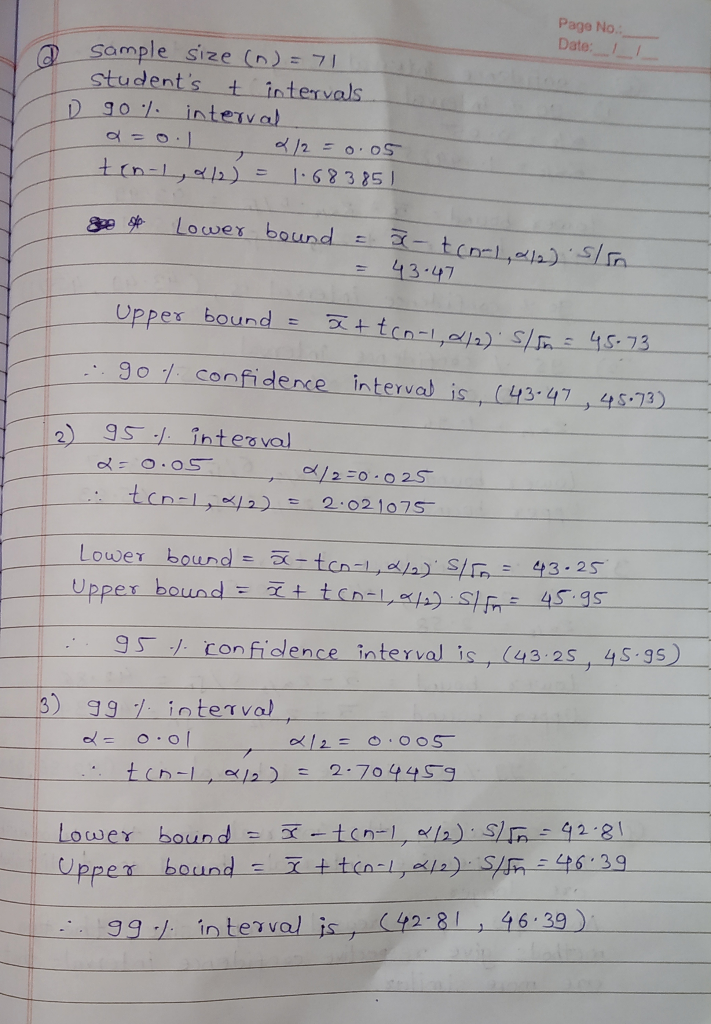
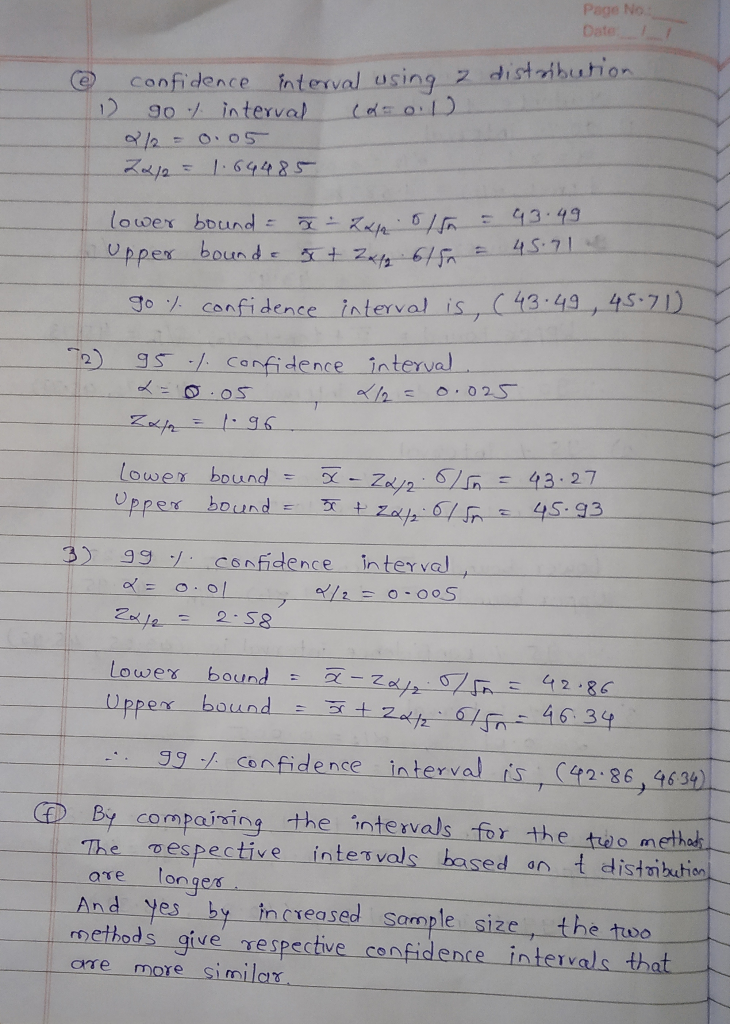
When σ is unknown and the sample is of size n ≥ 30, there are two methods for computing confidence intervals for μ. Method 1: Use the Student's t distribution with d.f. = n − 1. This is the method used in the text. It is widely employed in statistical studies. Also, most statistical software packages use this method. Method 2: When n ≥ 30, use the sample standard deviation s as an estimate for σ, and then use the standard normal distribution. This method is based on the fact that for large samples, s is a fairly good approximation for σ. Also, for large n, the critical values for the Student's t distribution approach those of the standard normal distribution. Consider a random sample of size n = 41, with sample mean x = 44.6 and sample standard deviation s = 5.7. (a) Compute 90%, 95%, and 99% confidence intervals for μ using Method 1 with a Student's t distribution. Round endpoints to two digits after the decimal. 90% 95% 99% lower limit upper limit (b) Compute 90%, 95%, and 99% confidence intervals for μ using Method 2 with the standard normal distribution. Use s as an estimate for σ. Round endpoints to two digits after the decimal. 90% 95% 99% lower limit upper limit (c) Compare intervals for the two methods. Would you say that confidence intervals using a Student's t distribution are more conservative in the sense that they tend to be longer than intervals based on the standard normal distribution? Yes. The respective intervals based on the t distribution are shorter. Yes. The respective intervals based on the t distribution are longer. No. The respective intervals based on the t distribution are shorter. No. The respective intervals based on the t distribution are longer. Correct: Your answer is correct. (d) Now consider a sample size of 71. Compute 90%, 95%, and 99% confidence intervals for μ using Method 1 with a Student's t distribution. Round endpoints to two digits after the decimal. 90% 95% 99% lower limit upper limit (e) Compute 90%, 95%, and 99% confidence intervals for μ using Method 2 with the standard normal distribution. Use s as an estimate for σ. Round endpoints to two digits after the decimal. 90% 95% 99% lower limit Incorrect: Your answer is incorrect. upper limit (f) Compare intervals for the two methods. Would you say that confidence intervals using a Student's t distribution are more conservative in the sense that they tend to be longer than intervals based on the standard normal distribution? Yes. The respective intervals based on the t distribution are shorter. Yes. The respective intervals based on the t distribution are longer. No. The respective intervals based on the t distribution are longer. No. The respective intervals based on the t distribution are shorter. Correct: Your answer is correct. With increased sample size, do the two methods give respective confidence intervals that are more similar?
Solutions
 milcah answered 1 month ago
Related Solutions
When σ is unknown and the sample is of size n ≥ 30, there are two...
When σ is unknown and the sample is of size n ≥ 30, there are two...
When σ is unknown and the sample is of size n ≥ 30, there are two...
When σ is unknown and the sample is of size n ≥ 30, there are two...
When σ is unknown and the sample is of size n ≥ 30, there are two...
When σ is unknown and the sample is of size n ≥ 30, there are two...
When σ is unknown and the sample is of size n ≥ 30, there are two...
When σ is unknown and the sample is of size n ≥ 30, there are two...
When σ is unknown and the sample is of size n ≥ 30, there are two...
When σ is unknown and the sample is of size n ≥ 30, there are two...
- Graph a Monopoly. Compare the price, quantity, and ATC of a monopoly with a perfectly competitive...
- Problem 18-12 Various shareholders' equity topics; comprehensive [LO18-1, 18-4, 18-5, 18-6, 18-7, 18-8] Part A In...
- Hello There, This is discussion Question For Advanced Database Systems Question: (a) Please define what a...
- Physicians at a clinic gave what they thought were drugs to 860860 patients. Although the doctors...
- On January 1, 2018, bonds with a face value of $ 79,000 were sold. The bonds...
- How do I make this sort in true alphabetical order instead of ascii(ABCabc) order? I am...
- As a healthcare provider in physical therapy, athletic training, or as an exercise scientist and personal...