Question
In: Math
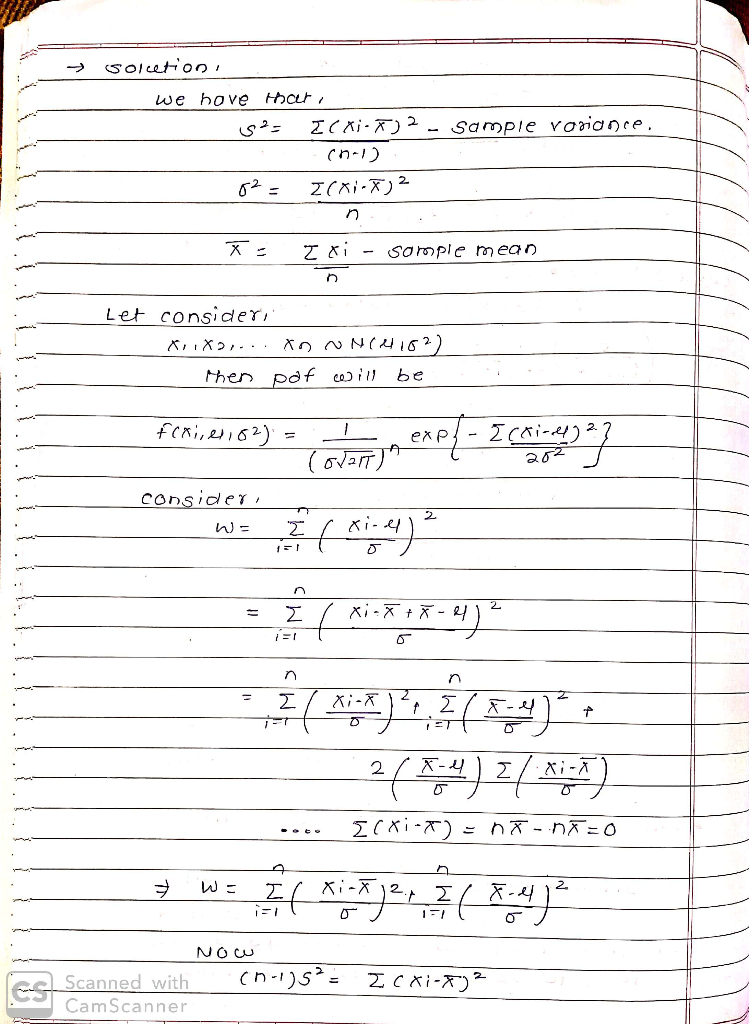
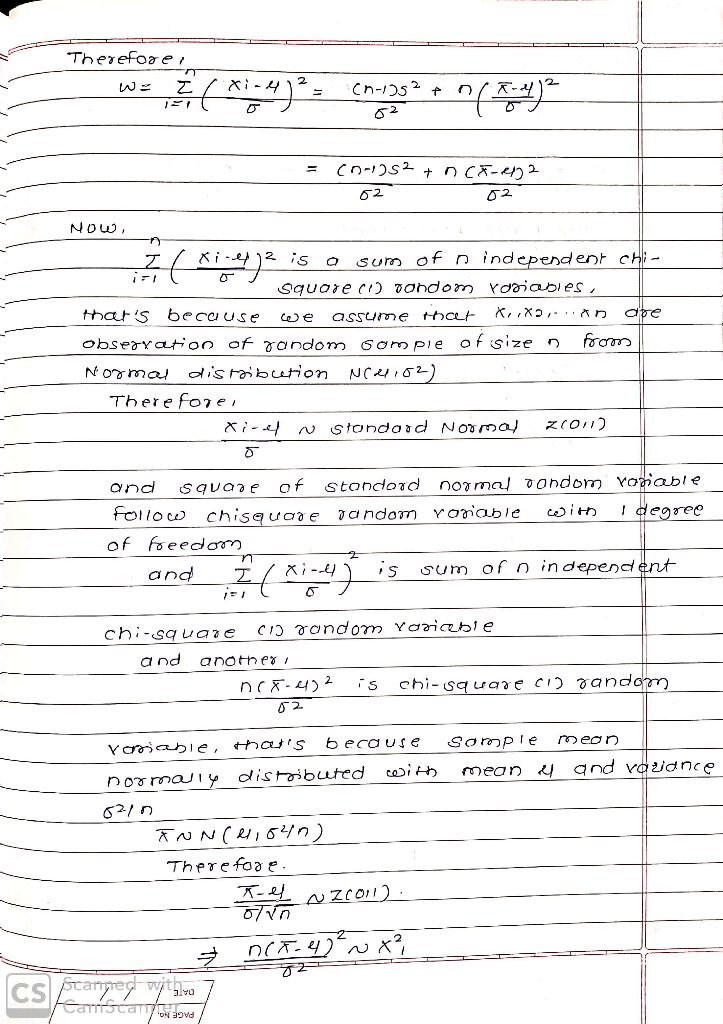
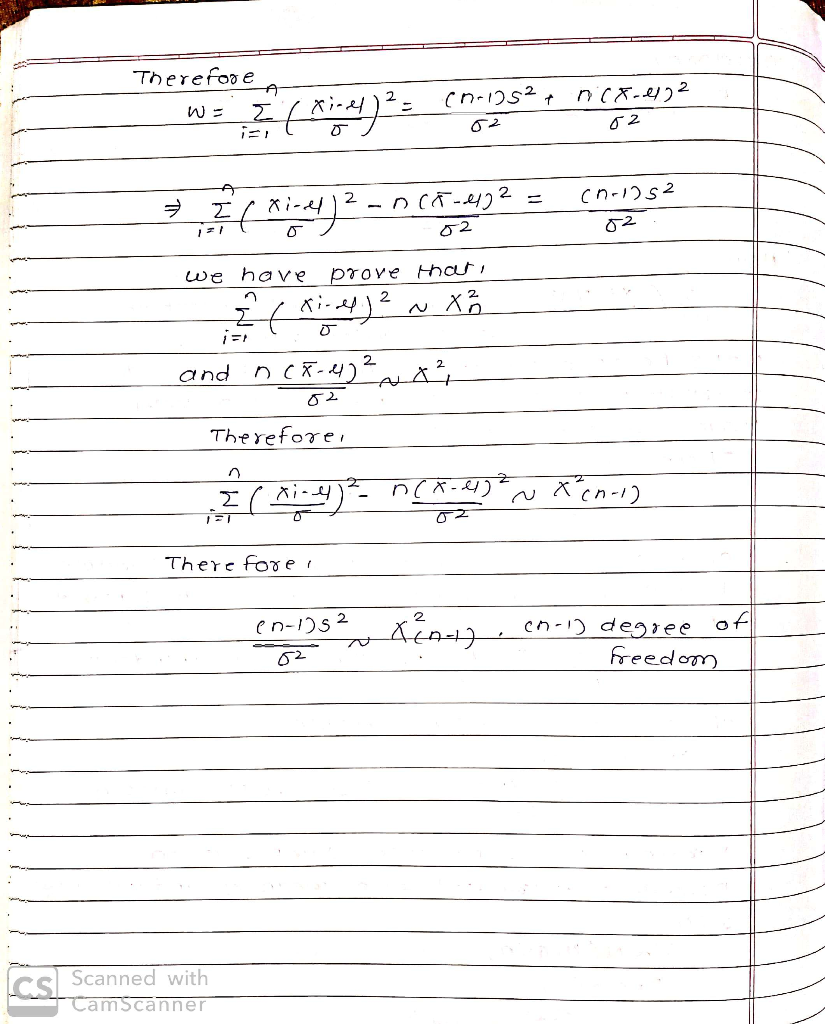
S2(n-1) / σ² is distributed X2(n-1) when ........?
S2(n-1) / σ² is distributed X2(n-1) when ........?
Solutions
 milcah answered 1 month ago
Related Solutions
Make a simulation to verify the following theorem: if X1 ∼ N(µ1, (σ 1)^2 ), X2...
Make a simulation to verify the following theorem: if X1 ∼ N(µ1,
(σ 1)^2 ), X2 ∼ N(µ2, (σ2)^ 2 ), and X1 and X2 are independent,
then X1 + X2 ∼ N(µ1 + µ2, (σ2)^2+ (σ 2 )^2 ).
1. When σ is unknown and the sample is of size n ≥ 30, there are...
1. When σ is unknown and the sample is of size
n ≥ 30, there are two methods for computing confidence
intervals for μ.
Method 1: Use the Student's t distribution with
d.f. = n − 1.
This is the method used in the text. It is widely employed in
statistical studies. Also, most statistical software packages use
this method.
Method 2: When n ≥ 30, use the sample standard
deviation s as an estimate for σ, and then use...
When σ is unknown and the sample is of size n ≥ 30, there are two...
When σ is unknown and the sample is of size n
≥ 30, there are two methods for computing confidence intervals for
μ.
Method 1: Use the Student's t distribution with
d.f. = n − 1.
This is the method used in the text. It is widely employed in
statistical studies. Also, most statistical software packages use
this method.
Method 2: When n ≥ 30, use the sample standard
deviation s as an estimate for σ, and then use
the...
When σ is unknown and the sample is of size n ≥ 30, there are two...
When σ is unknown and the sample is of size n
≥ 30, there are two methods for computing confidence intervals for
μ.
Method 1: Use the Student's t distribution with
d.f. = n − 1.
This is the method used in the text. It is widely employed in
statistical studies. Also, most statistical software packages use
this method.
Method 2: When n ≥ 30, use the sample standard
deviation s as an estimate for σ, and then use
the...
When σ is unknown and the sample is of size n ≥ 30, there are two...
When σ is unknown and the sample is of size n ≥ 30, there are
two methods for computing confidence intervals for μ. Method 1: Use
the Student's t distribution with d.f. = n − 1. This is the method
used in the text. It is widely employed in statistical studies.
Also, most statistical software packages use this method. Method 2:
When n ≥ 30, use the sample standard deviation s as an estimate for
σ, and then use the...
When σ is unknown and the sample is of size n ≥ 30, there are two...
When σ is unknown and the sample is of size n ≥ 30, there are
two methods for computing confidence intervals for μ. Method 1: Use
the Student's t distribution with d.f. = n − 1. This is the method
used in the text. It is widely employed in statistical studies.
Also, most statistical software packages use this method. Method 2:
When n ≥ 30, use the sample standard deviation s as an estimate for
σ, and then use the...
When σ is unknown and the sample is of size n ≥ 30, there are two...
When σ is unknown and the sample is of size n
≥ 30, there are two methods for computing confidence intervals for
μ.
Method 1: Use the Student's t distribution with
d.f. = n − 1.
This is the method used in the text. It is widely employed in
statistical studies. Also, most statistical software packages use
this method.
Method 2: When n ≥ 30, use the sample standard
deviation s as an estimate for
σ, and then use the...
When σ is unknown and the sample is of size n ≥ 30, there are two...
When σ is unknown and the sample is of size n ≥ 30, there are
two methods for computing confidence intervals for μ.
Method 1: Use the Student's t distribution with d.f. = n − 1.
This is the method used in the text. It is widely employed in
statistical studies. Also, most statistical software packages use
this method.
Method 2: When n ≥ 30, use the sample standard deviation s as an
estimate for σ, and then use the...
When σ is unknown and the sample is of size n ≥ 30, there are two...
When σ is unknown and the sample is of size n ≥ 30, there are
two methods for computing confidence intervals for μ. Method 1: Use
the Student's t distribution with d.f. = n − 1. This is the method
used in the text. It is widely employed in statistical studies.
Also, most statistical software packages use this method.
Method 2: When n ≥ 30, use the sample standard deviation s as an
estimate for σ, and then use the...
When σ is unknown and the sample is of size n ≥ 30, there are two...
When σ is unknown and the sample is of size n ≥ 30, there are
two methods for computing confidence intervals for μ. Method 1: Use
the Student's t distribution with d.f. = n − 1. This is the method
used in the text. It is widely employed in statistical studies.
Also, most statistical software packages use this method. Method 2:
When n ≥ 30, use the sample standard deviation s as an estimate for
σ, and then use the...
ADVERTISEMENT
ADVERTISEMENT
Latest Questions
- On January 1, 2018, bonds with a face value of $ 79,000 were sold. The bonds...
- How do I make this sort in true alphabetical order instead of ascii(ABCabc) order? I am...
- As a healthcare provider in physical therapy, athletic training, or as an exercise scientist and personal...
- in the market for makeup artists, what happens after the invention of high-definition tv allowing viewers...
- 10. What are the three monetary policy tools of the Fed? Briefly describe how each tool...
- In what ways would the role of a manager working in a nonstandard international assignment arrangement...
- Write a Bash script called move that could replace the UNIX command mv. 'move' tries to...
ADVERTISEMENT