Question
In: Physics
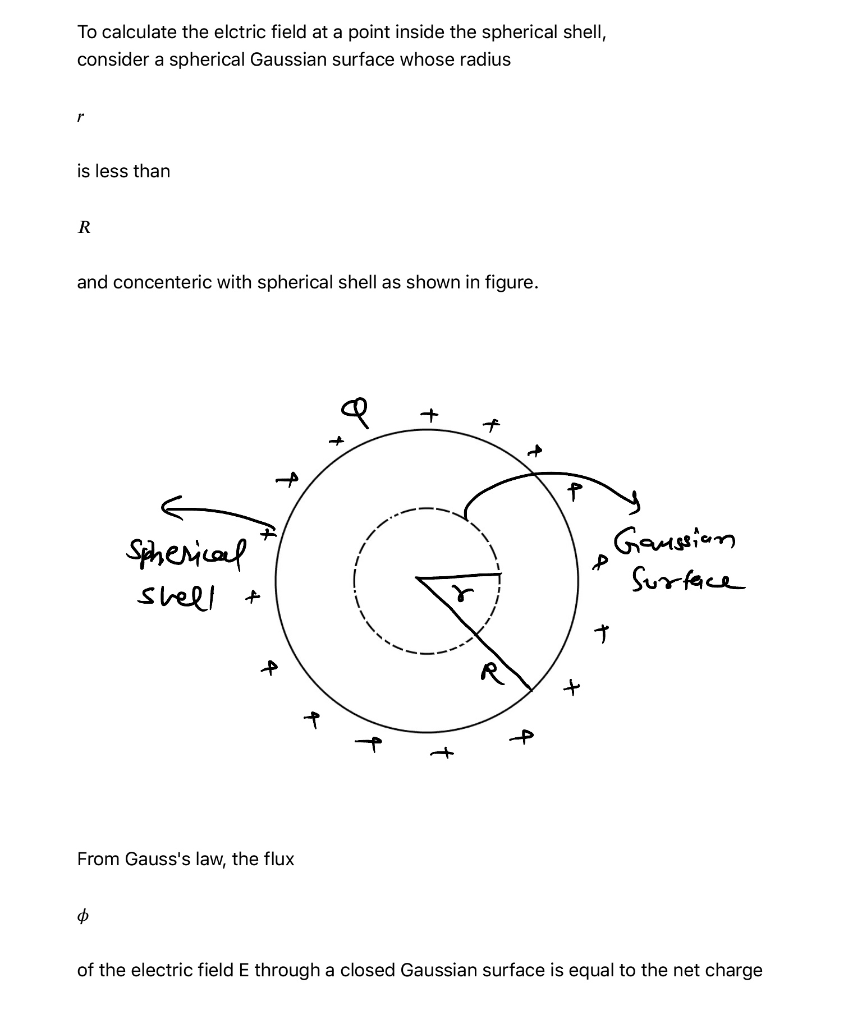
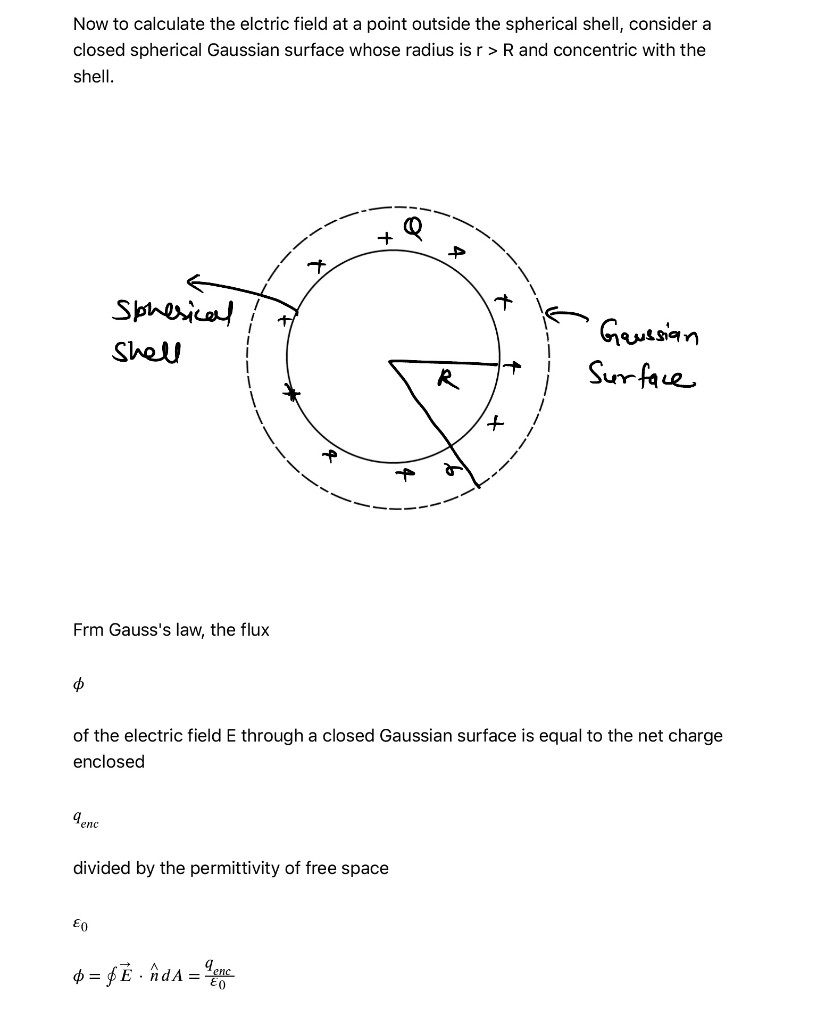
Gauss's Law A spherical shell of radius R has charge Q spread uniformly over its surface....
Gauss's Law
A spherical shell of radius R has charge Q spread uniformly over
its surface.
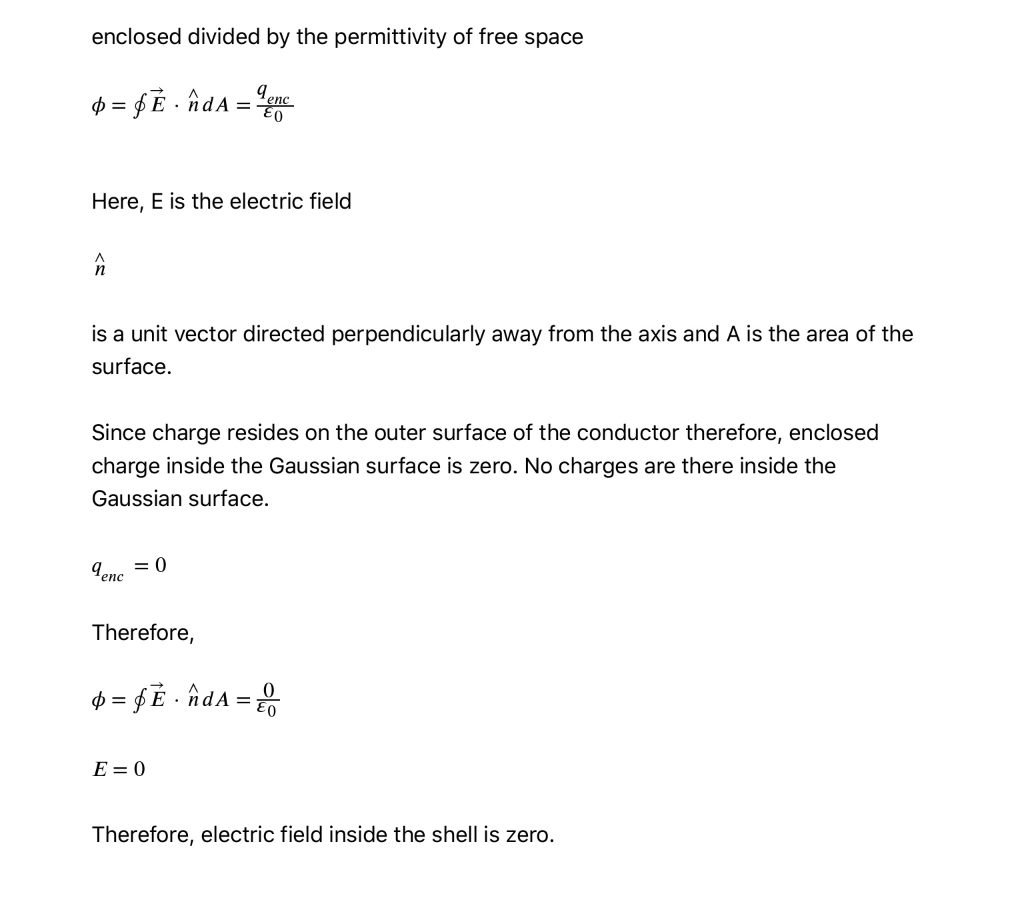
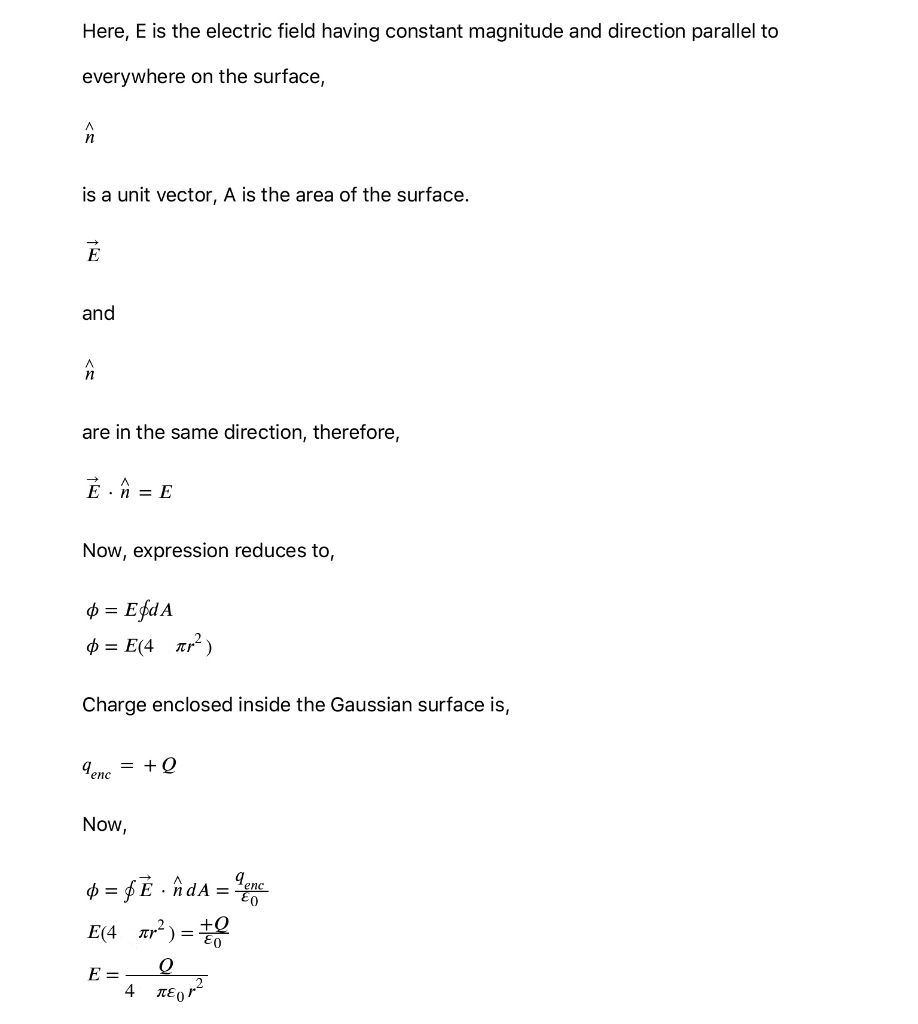
Find the electric field inside and outside the shell.
Solutions
 genius_generous answered 6 months ago
Related Solutions
A thin spherical shell of radius R and total charge Q distributed uniformly over its surfacce....
A thin spherical shell of radius R and total charge Q
distributed uniformly over its surfacce.
1. Plot resistitivity as a function of temperature for some
resonable range of temeratures.
2. Design a resistor made of copper that has a resistance of 50
Ohms at room remperature.
A spherical charge distribution of radius R has a charge Q distributed uniformly over its volume....
A spherical charge distribution of radius R has a charge Q
distributed uniformly over its volume. Find the magnitude of the
electric field E(r) and the electric potential V (r) for all r.
An isolated conducting sphere of radius R has charge Q uniformly distributed on its surface. What...
An isolated conducting sphere of radius R has charge
Q uniformly distributed on its surface. What is the
electric field (E) inside the conducting sphere at
distance r = R/2 from center?
Charge q = + 15 nC is uniformly distributed on a spherical shell that has a...
Charge q = + 15 nC is uniformly distributed on a
spherical shell that has a radius of 120 mm.
1. What is the magnitude of the electric field just outside the
shell? (Express your answer with the appropriate units.)
2. What is the magnitude of the electric field just inside the
shell? (Express your answer with the appropriate units.)
3. What is the direction of the electric field just outside and
just inside the shell?
a. radially inward just...
Consider a spherical shell with radius R and surface charge density σ. By integrating the electric...
Consider a spherical shell with radius R and surface charge
density σ. By integrating the electric field, find the potential
outside and inside the shell. You should find that the potential is
constant inside the shell. Why?
A spherical balloon is initially uncharged. If you spread positive charge uniformly over the balloon's surface...
A
spherical balloon is initially uncharged. If you spread positive
charge uniformly over the balloon's surface would it expand or
contract? What would happen if you spread negative charge instead?
According to my TA the correct answer is when it's positive
charge it expands and when it's negative charge it contracts.
What is the reasoning behind this? Please explain.
A spherical shell of radius a has a uniform surface charge density σ and rotates with...
A
spherical shell of radius a has a uniform surface charge density σ
and rotates with a constant angular velocity ω in relation to an
axis that passes through its center. In this situation, determine
the magnetic dipole moment μ of the spherical shell.
surface charge density which is σ=σ0 cosθ is distributed on the spherical shell with radius R...
surface charge density which is σ=σ0 cosθ is
distributed on the spherical shell with radius R .Using the Laplace
eqn find electric potential outside the sphere .
A charge of -7.00 nC is spread uniformly over the surface of one face of a...
A charge of -7.00 nC is spread uniformly over the surface of one
face of a nonconducting disk of radius 1.30 cm . a) Find the
magnitude of the electric field this disk produces at a point P on
the axis of the disk a distance of 3.00 cm from its center. b)
Suppose that the charge were all pushed away from the center and
distributed uniformly on the outer rim of the disk. Find the
magnitude of the electric...
A charge of -5.50nC is spread uniformly over the surface of one face of a nonconducting...
A charge of -5.50nC is spread uniformly over the surface of one
face of a nonconducting disk of radius 1.00cm
Part A
Find the magnitude of the electric field this disk produces at a
point P on the axis of the disk a distance of 3.00cm from
its center.
Part B
Suppose that the charge were all pushed away from the center and
distributed uniformly on the outer rim of the disk. Find the
magnitude of the electric field at...
ADVERTISEMENT
ADVERTISEMENT
Latest Questions
- Example: We are looking at the cholesterol levels of population of 200 healthy individuals. Cholesterol of...
- In an experiment on the Reaction of Magnesium with Hydrochloric Acid. What would be the effect...
- sort_employees(Employee emps[], int size) (40 pts) This function should sort the input array based on each...
- Write the program in JAVA. Make an undirected, but disconnected graph of at least 15 vertices...
- Teen Smoking Project CHAPTER 0. Preliminary Discussion Question: 1. What conjectures (educated guesses) could be made...
- In reviewing firm liquidity situations, lenders often count on the Quick Ratio (or Acid-Test ratio). Why...
- code a Java program that: Requests from the user for a text filename to read the...
ADVERTISEMENT