Questions
This activity requires you to spend some time viewing the world using the perspective of the...
This activity requires you to spend some time viewing the world using the perspective of the social construction of disability.
From the social constructionist perspective, disability is created through interaction between individuals and their environments.
Include at least two separate observations.
Each of your observations should illustrate a different way that disability is socially constructed.
Describe what you observed and then briefly explain how your observation illustrates the social construction of disability.
Professors Example: Today I was in line at HEB behind an older person who was moving at a slower pace than the younger people. It was difficult for the older person to manage his cane and use his credit card at the same time. He seemed to have difficulty reading the “prompts” on the credit card device. The person directly behind the older person was noticeably impatient. Clearly the whole setup of the check-out line and credit card device is aimed for people whose hands are free (not needing a cane) and who have good vision. People are also expected to manage the check-out process quickly and keep the line moving. Wendell described the way in which the pace of life does not accommodate anyone who requires more time or needs to rest or needs help opening a door. Our pace of life also does not readily accommodate someone who needs large print on credit card devices and something to lean on to free his hands to manage his wallet and credit card. We create disability by not accommodating variations in vision and mobility.
Today I heard about a school shooting in which several people were killed and others were injured. The violence we allow in society is creating disability for the injured people who may never regain their previous levels of physical functioning. Wendell explicitly mentioned that by failing to protect people from shootings and other violent crimes, society creates disability. In our module on the criminal justice system, we learned that the U.S. has more gun violence than any other country. This and other school shootings suggest that by failing to adequately regulate guns, we are creating disability.
In: Psychology
Understanding Human Behavior and the Social Environment by Zastrow. Life Structure and Environmental Interactions Levinson developed...
Understanding Human Behavior and the Social Environment by Zastrow.
Life Structure and Environmental Interactions
Levinson developed the concept of life structure which is important to the field of human services. This premise indicates that a person is shaped by personal interactions and one’s environment. For this week’s Discussion, review the information in Chapter 11 about Levinson’s theories and consider where you are according to the life structures defined.
Please respond to the following:
- Identify life structure and explain some of the passages which
you have experienced during Preadulthood (birth to age 22) (is the
formative time from conception to the end of adolescence) and Early
adulthood (age 17 to age 45) (is the era in which people make
choices that significantly influence their lives and the era in
which people display the greatest energy and experience the most
stress).
- Early adult transition (ages 17 to 22). During this transition (which may take three to five years), men move from pre-adulthood into adulthood. A person moves out of his or her parents' home and becomes more financially and emotionally independent. Going to college or joining the military service serves as a transitional institutional situation between being a child in a family and reaching full adult status.
-
At the heart of Levinson's theory is the concept of life structure. This term is defined as “the underlying pattern or design of a person's life at a given time” (Levinson, 1986, p. 6). A person's life structure shapes and is shaped by the person's interactions with the environment. Components of the life structure include the people, institutions, things, places, and causes that a person decides are most important, as well as the dreams, values, and emotions that make them so. Most people build their life structures around their work and their families. Other important aspects of one's life structure may include religion, racial identification, ethnic heritage, societal events (such as wars and economic depressions), and hobbies.
According to Levinson, life involves a number of passages: from the freedom of childhood to entering school; from school to the work world; from not dating to dating; from dating to breaking up or marrying; from marrying to divorce; and so on. Levinson sees some structure to these series of life passages.
- Include how personality was influenced by interactions and the environment.
In: Psychology
Sex Education and Teenage Pregnancy Santrock (2016) mentions in his text that the United States has...
Sex Education and Teenage Pregnancy
Santrock (2016) mentions in his text that the United States has one of the highest teenage pregnancy rates of industrialized nations, despite the fact that adolescent sexual activity is no higher in the United States. Why is that? For starters, sex during adolescence is considered a "taboo" subject in our culture. Abstinence is also promoted and touted as the most safest, surefire way to avoid the consequences of early sexual activity. Additionally, we teach teens that sexual activity is an "adult activity" and do not acknowledge that during the adolescent period, when there is an upsurge of hormones and changes in the physiological landscape, teens grow curious about their bodies and that of the opposite sex. Teens are also at a stage in their life where experimentation and identify formation are at its "peak", and questioning, expressing, and exploring their sexual identity is part of that process.
How many people did you know in high school knew what sex was and even had sex? Probably the majority. That is because sexual curiosity during adolescence is part of healthy, typical human development.
What is sex education?
Briefly, sex education is about instilling accurate, scientific-based information and spreading awareness about the following:
1. The physiological changes that occur in the body due to pubertal/hormonal changes.
2. The risks and consequences involved in sexual activity such as contracting sexually transmitted diseases or pregnancy.
3. It involves teaching youngsters how to set boundaries with others when it comes to their own body and other people's bodies (i.e."No means NO!").
4. Contraception options-how to be "sex smart" such as the benefits of using protection.
5. A discussion about knowing when they are "ready" to have sex.
6. Define rape and sexual assault and how to know if you are about to be a victim.
Put it in Perspective...
Answer the Following Discussion Questions:
1. What was your experience with 'sex education'? Did you take a class in school? Did you learn from your caregivers? Include points that you remember learning. And how has that served you as a teenager?
2. According to the film "Inside the Teenage Brain" and your textbook readings, what are some effective ways to approach a conversation with teenagers about 'safe sex'?
In: Psychology
Required information [The following information applies to the questions displayed below.] The City of Lynnwood was...
Required information
[The following information applies to the questions displayed below.]
The City of Lynnwood was recently incorporated and had the following transactions for the fiscal year ended December 31.
- The city council adopted a General Fund budget for the fiscal year. Revenues were estimated at $2,100,000 and appropriations were $2,000,000.
- Property taxes in the amount of $2,040,000 were levied. It is estimated that $14,000 of the taxes levied will be uncollectible.
- A General Fund transfer of $30,000 in cash and $310,000 in equipment (with accumulated depreciation of $75,000) was made to establish a central duplicating internal service fund.
- A citizen of Lynnwood donated marketable securities with a fair value of $900,000. The donated resources are to be maintained in perpetuity with the city using the revenue generated by the donation to finance an after school program for children, which is sponsored by the culture and recreation function. Revenue earned and received as of December 31 was $50,000.
- The city’s utility fund billed the city’s General Fund $135,000 for water and sewage services. As of December 31, the General Fund had paid $134,000 of the amount billed.
- The central duplicating fund purchased $9,500 in supplies.
- Cash collections recorded by the general government function during the year were as follows:
| Property taxes | $ | 1,935,000 | |
| Licenses and permits | 45,000 | ||
| User charges | 33,000 | ||
- During the year the internal service fund billed the city’s general government function $20,700 for duplicating services and it billed the city’s utility fund $13,100 for services.
- The city council decided to build a city hall at an estimated cost of $5,100,000. To finance the construction, 5 percent bonds were sold at the face value of $5,100,000. A contract for $4,600,000 has been signed for the project; however no expenditures have been incurred as of December 31.
- The general government function issued a purchase order for $37,000 for computer equipment. When the equipment was received, a voucher for $32,900 was approved for payment and payment was made.
a. For each transaction number identify all of the fund and/or government-wide activity journals in which journal entries must be made. (Select all that apply.)
| General Fund | GF | |
| Capital projects fund | CPF | |
| Internal service fund | ISF | |
| Permanent fund | PF | |
| After School Fund (a special revenue fund) | SRF | |
| Enterprise fund | EF | |
| Governmental activities | GA | |
In: Accounting
As the World Health Organization notes, “The research supporting the relation between all forms of aggression...
As the World Health Organization notes, “The research supporting the relation between all forms of aggression and alcohol use is enormous [and] unequivocal.” In their 2018 report, the United Nations Office on Drugs and Crime (UNODC) declared home to be the most dangerous place for women, with the majority of female homicide victims globally being killed by intimate partners or family. Globally, in 2017, 87,000 women were intentionally killed, more than half (58%) were killed by intimate partners or family members, while on the African continent more than two-thirds (69%) of women intentionally killed in 2017 were killed by an intimate partner or family member. South
Africa’s domestic violence rates are notoriously high. Many women and children are exposed to emotional, physical and financial violence and abuse regularly. In South Africa, it is estimated that one in two women experience violence perpetrated by an intimate partner and three women are intentionally killed by their intimate partners each day.
Now, as the world attempts to slow the spread of Covid-19, authorities have introduced the concept of “social distancing” which calls upon people to maintain a degree of physical distance. The optimal form of social distancing requires people to be at home. What happens when home is not safe?
A beer brand might seem an unlikely ally in the campaign to end violence against women. But the clear connection between alcohol and abusive behavior made Carling Black Label, the largest beer brand in South Africa, realize it had to take up the challenge. The brand has long targeted men, and its messaging has been all about defining masculinity. In the 1980s its television ads featured cowboys who deserved a cold Carling Black Label as a reward for a long day’s work. In the 1990s, when South Africa abolished apartheid, Carling’s ads depicted a nation of builders: Ordinary men were now the heroes—strong, honest, and hardworking. In the 2000s the brand connected the beer with entrepreneurs and the rising generation of “self-made” men, the new role models. That is where things stood when AB InBev bought Carling’s owner, SABMiller, in 2016. Andrea Quaye, then AB InBev’s new vice president of marketing for Africa, understood how valuable the brand was, but she also knew it could not continue with business as usual. As the acquisition was going through, local researchers were raising alarms about the country’s drinking problem. South Africans are among the heaviest drinkers on the continent, and men are by far the major consumers. This excess has many consequences, but the most troubling issues in South Africa are rates of murder and violence targeting women that far exceed the global average.
Rather than trying to distance itself from the problem, Carling decided to confront it and use its clout to drive social change. In 2017, Carling launched a TV and social media campaign against gender-based violence under the hashtag #NoExcuse. Carling took responsibility—and risk. It sponsored a men’s march that drew 8,000 people, released five million #NoExcuse cans of beer, and called on South African men to take a pledge to combat violence against women. Building on this, Carling worked with Ogilvy, the global media communications firm, and indaHash, an influencer marketing firm, to take its message to the Soweto Derby, a biannual soccer match that transfixes much of the country. The two soccer teams, the Orlando Pirates and the Kaizer Chiefs, joined in the no excuse campaign as well. The players wore #NoExcuse armbands during the series of games and posed with a banner at the end. Analysts reported that the Soccer Song for Change “Asambe Nono (the South African soccer anthem, but with new lyrics)” campaign reached 45 million people. Andrea Quaye, Vice President Marketing, SAB and AB InBev Africa, said while launching the campaign: “Our decision to be an inaugural supporter of the #NoExcuse movement was driven by Carling Black Label’s status as a beacon of masculinity. As the largest beer brand in the country, it is our responsibility to ensure alcohol is consumed responsibly and to use the power of our brand to challenge South African men and our consumers to take action.
Black Label wanted to keep South African women safe and maintain the brand’s leadership position, but at the same time, it had to stay true to its heritage as an emblem of masculinity.
The question was: How to do it?
4.1. Critically evaluate the efforts of Carling Black Label and its focus of reducing violence at the same time keeping masculinity positioning intact. Critically discuss the challenges faced in implementation, evaluation and control of such marketing efforts.
However, another opinion, “Carling’s initiative is nothing but a marketing ploy” do you agree with the statement or not. Justify your position.
Scenario inputs from Daily Maverick & HBR, 2020
In: Operations Management
Important Vocab GDP Currency value of all final goods and services produced within a country’s borders...
Important Vocab
|
GDP |
Currency value of all final goods and services produced within a country’s borders |
|
Real GDP |
Currency value of all final goods and services produced within a country’s borders minus the effects of inflation |
|
Inflation |
A general rise in the price level of an economy |
|
Consumption |
Dollar value of all goods and services purchased by households |
|
Investment |
Dollar value of all goods and services purchased by business for the purpose of using in their business |
|
Government Spending |
Dollar value of all goods and services purchased by the various agencies of the United States. |
|
Net Exports |
Dollar value of all goods and services produced in the United States and shipped to other countries MINUS the value of the goods and services imported from other countries |
|
Aggregate Demand |
The amount of goods and services ALL buyers in the economy are willing/able to buy at all the possible price levels |
|
Aggregate Supply |
The amount of goods and services ALL companies are willing to produce at ALL possible price levels |
|
GDP Per Capita |
Currency value of all final goods and services produced within a country’s borders divided by the population |
|
Imports |
Goods and services produced in other countries, then brought to the United States in exchange for currency |
|
Exports |
Goods and services produced in the United States, then sent to other countries in exchange for currency |
|
Standard of Living |
Intangible concept that seeks to represent a country’s level of economic prosperity. Correlates with GDP growth |
Based on the vocab & videos in Chapter 8 complete the following:
What is GDP?
- Currency value of all _____________ goods and services produced
_________________ in a given period
- Total income of a nation
- Measure of nation‟s economic well-being
- Measure of a nation‟s ______________________ from one period to the next
- Most commonly calculated via ____________________
Four components of GDP expenditures
- Consumption: $ amount of goods and services
purchased by__________________
- ONLY counts goods produced in the _____________
- Examples: __________________________________
- Investment: $ amount spent by business on
productive resources and purchases of _________ by consumers! - New
machines, new factories, research
- ____________________________ also counts
- Government: $ amount spent
____________________provided goods and services
- Example: ______________________________________
- Net exports = _______________________________
Exports: ________________________________________
Imports:________________________________________
GDP = _____ + _____ + _____ + _____
What’s NOT included in GDP?
- Intermediate goods ¨ Financial transactions
- Used goods ¨ Household production
- Underground production (black ¨ Transfer payments market)
What GDP does not tell us:
- Does not measure ___________________
- Does not measure non-monetary output or transactions (e.g., barter, household activities) ¨ Does not take into account desirable externalities, such as ________________
_________________________________
- Does not measure social well-being
- Correlates to standard of living but is _______________________________
|
Scenario |
Component of GDP affected: C, I, G, X-M, or NCnot counted |
Effect on GDP (increase, decrease, no change) |
|
1. A farmer purchases a new tractor. |
||
|
2. Businesses increase their current inventories. |
||
|
3. You spend $7 to attend a movie. |
||
|
4. Worried about consumer confidence, Ford purchases less sheet metal for cars. |
||
|
5. A retired man cashes his social security check from the government. |
||
|
6. A French company purchases a one-year membership to PartyPeople.com, a U.S.-based |
||
|
website. 7. A person pays $450 a month to rent an apartment. |
||
|
8. Worried about a recession, people begin saving more money. |
||
|
9. The U.S. government hires 10 Chinese-language experts from China to train U.S. workers. |
||
|
10. Government closes school for the month of March. |
In: Economics
Sweet leaf tea In March 2010, Clayton Christopher announced to his employees and all of the...
Sweet leaf tea
In March 2010, Clayton Christopher announced to his employees and all of the fans of sweet Leaf tea that he was leaving the company and handing leadership to an outsider, Dan Costello. Clayton’s final act was to send an email to his employees praising their performance and integrity, which helped grow sweet leaf tea to the number one ready to drink tea at whole foods. In his email, he wrote that after his departure he hoped: We will not sacrifice the magic of this brand and thus jeopardize the love affair we have created with our consumers in order to save a few dollars on our path up the mountain.
Tea Drinkers Heaven
The ready to drink tea market was consistently ranked as one of
the fastest growing new product entries in the early twenty- first
century. In 2007 total sales if tea equaled $6.85 billion, almost a
third od which were ready to drink ( RTD) or bottled tea. Tea is
high in antioxidants, has health boosting properties and is either
all natural or organic which might be the reason more people were
move from traditional carbonate drinks to healthy options like
Sweet Leaf Tea . between 2003-and 2008 the RTD category grew by 65
%. In the southern United States, tea has long been a popular
beverage choice. It is usually served cold and sweetened. It can be
found in any restaurant, mom and pop store or at a road- side stop.
From moonshine to big time Clayton Christopher and David Smith were
always fans of sweet tea and loved their Grandma’s recipe. But they
couldn’t find any good bottled tea that tasted as good as what
Grandma made. Their grandma made sweet tea by brewing teabags
for3-4 minutes. Then she would pour that freshly brewed tea over
ice and add natural sugarcane to make it sweet. In 1997 they
founded Sweet Leaf Tea ( SLT) to fill this void, and hoped that
others would enjoy their Grandma’s recipe as much as they did.
Initially their production and marketing more closely resembled
that of a moonshine producer than that of the multi Million- dollar
brand it today. They used giant crawfish pans to boil the water and
pillowcase as giant tea bags to brew the tea. To distribution the
bottled beverages they had an old fun down van. Clayton and David
moved Sweet leaf Tea from Beaumont to Austin, Texas after a couple
of years and started using an automated system to make the tea.
But, they always remained true to their grandma’s recipe. Sweet
Leaf Tea’s only competitive advantage was its superior flavor
compared to other ready to drink teas like Arizona, Snapple,
Lipton, and Nestea. In 2008 SLT had $12 million in revenue and was
available in 30 percent of the US market. In March 2009, Nestle
Waters purchase as third of Sweet Leaf Tea for $16.5 Million. With
large investment from Nestle waters also came a new president, Dan
Costello a former executive at Nestle Waters North America. Growing
their brand Beverages tend to be low-involvement products, but also
a unique in that everyone has a favorite drink, which make it very
personal Sweet Leaf Tea had to find ways to develop a following of
customers
without a big advertising budget. They focused on sampling at music
Festivals, products placement on shows like MTV’s Real World and
CBS’s big Brother as well as Making sure they had a clear brand
personality. Clayton and David worked with Lyon Advertising to
create a brand personality that would represent who they were, laid
back and fun, but did not forget Clayton’s Grandma Mimi. SLT could
build a large fun base they needed people to try their product. In
an interview conducted by Inc. Magazine Clayton stated “ Sampling
is the best form of marketing You’ve got to get the product past
people’s lips. In 2002 they started partnering with music festivals
like Austin City Limit ( ACL ) lollapalooza, South by south West
(SXSW) and country Thunder. The folks attending the festivals were
thirsty and willing to try new drinks. This also allowed then to
target their core target audience – young (25-45) laid back hip,
and health conscious beverage drinkers. Initially, ninety percent
of their advertising budget went to sampling (Inc). Focusing their
sampling program during music festivals allowed them to target
masses of people at a time when they were thirsty such as the dead
of summer in Texas, Chicago and Arizona. SLT realized very early,
however , that they needed to be on store shelves if they wanted
their customers to find and buy the product. Selling their product
at a few music festivals a year wouldn’t be enough to keep them in
business. Their first major store partnership was with whole foods
(WF) in 2002, which launched them on store shelves in the greater
Texas market. Adi Wilk, the former marketing manager at SLT stated
that the Whole Food Partnership “lifted the brand” in 2006 whole
food expanded the SLT market to all of their stores in the US.
Along with the Whole Foods partnership they also found distribution
through partnerships with 7-11 stores, placement in Texas school
vending machines, and at army bases. This allowed fans that may
have tried SLT at lollapalooza to find it in Chicago, or people
that traveled to Austin for ACL or SXSW to find it in New York at
their local whole Foods stores. SLT’s communication strategy had
traditionally focused on connecting to their customers their
partnership with WF, however, helped them grow the brand by being
on the shelves of national chain store and also helped them connect
to other distributors. But more importantly was that SLT the built
a strong connection with their customers, with most of them willing
to search far and wide for a bottle for SLT. This truly helped them
become a successful company. In 2008, with an infusion of money
from Catterton partner, a Connecticut - based private equity firm,
and Nestle Waters North America Inc, SLT had expanded their
marketing beyond sampling and store partnerships. In 2009 they had
three major advertising updates- 1) they launched a new website (2)
hired a dedicated Twitter Write (3) and added a team of Facebook
managers for the fan page. SLT empowered every employee to be a
spokesperson for the brand- with even their receptionist talking a
core part in their Twitter and Facebook posts.
Communications Role
Initially the core communication for Sweet Leaf Tea, was through
direct to customer marketing at music festivals. The owners,
Clayton and David, were at the Music Festivals handing out their
product. This allowed customers to meet the people behind the
beverage and link friendly faces to a good beverage. Also the
association with music festivals may have helped the brand develop
the Cool and Fun image they were pushing. Once SLT had expanded
beyond the central Texas market they needed to find a way to stay
connected to their customers and keep that direct to customer
communication active. The infusion of money from
both Catterton partners and Nestle waters allowed them to expand
their communication strategy beyond music festivals and their core
website. Their Facebook fans matched the same target audience they
first had a t music festivals. Their blog, Facebook, and Twitter
pages allowed them to continue that face to face communication
Clayton and David started at the music festivals, but in the
digital world. Their Facebook and Twitter communication reflected
the brand and the Culture of the Company. At the time, these two
sites were used for announcement about the brand or to communicate
special evet taking place during music festivals. As an example
during 2009 SXSW they also used Twitter to announce a free concert
and used Facebook to get people to RSVP to the event. In one week
they had 4,500 people registered on Facebook for the free concert.
Another advertising advance SLT made in 2009 was using mobile
technology to get consumers to search for their product and receive
free sample. SLT was one of the first companies to give away real
samples using Gowalla Gowalla was a location game that encouraged
people to find a virtual item in a real-world place. Gowalla
allowed then to use virtual sampling of a product and connect it to
real world sampling.
Questions :
1- What are the strength and weakness of SLT’s corporate Culture in the terms id communications, as described in the case ? 2- Considering the relationship the brand had with its audience, should Clayton have reached out to customers to announce he was leaving ? 3- What challenges do you see for SLT’s new management ? 4- What role should corporate communication paly at SLT to help the company advance its strategic goals? 5- As clayton’s replacement would you change the way SLT communicated with its customers, or who was allowed to ? why or why not ?
In: Operations Management
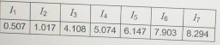
A space probe identifies a new element in a sample collected from an asteroid Successive ionization energies (in attojoules per atom) for the new element are shown below.
In: Chemistry
A space probe identifies a new element in a sample collected from an asteroid. Successive ionization energies (in attojoules per atom) for the new element are shown below.
A space probe identifies a new element in a sample collected from an asteroid. Successive ionization energies (in attojoules per atom) for the new element are shown below.

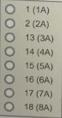
To what family of the periodic table does this new element probably belong?

In: Chemistry
What are factors weighing on the decision to establish a new branch.Determine the impact of a...
- What are factors weighing on the decision to establish a new branch.Determine the impact of a new branch’s expected return on the bank’s total return from its existing branches and other assets Determine the impact of a new branch’s on the bank’s total risk
In: Finance