Questions
The Thompson Corporation, a manufacturer of steel products, began operations on October 1, 2019. The accounting...

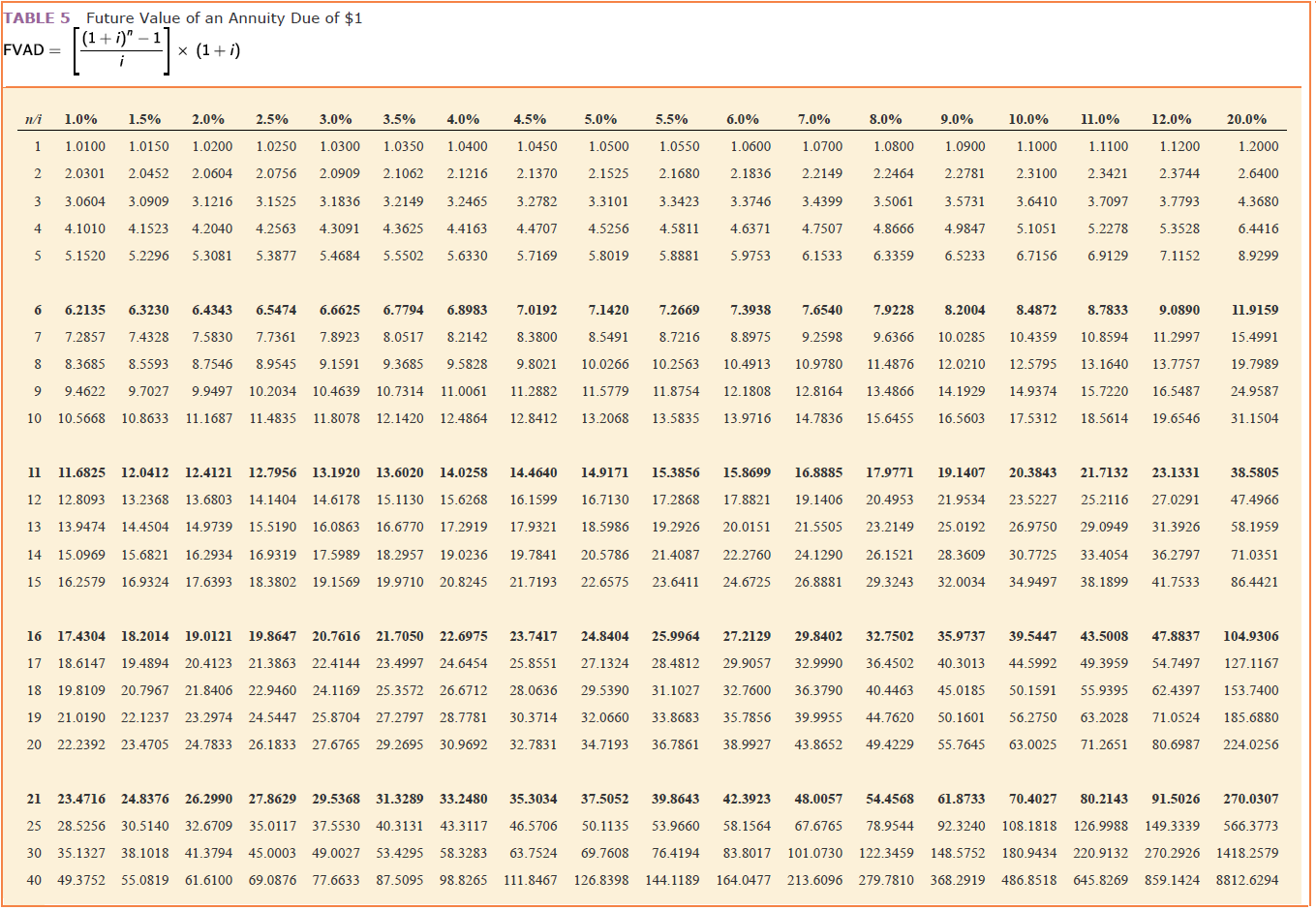
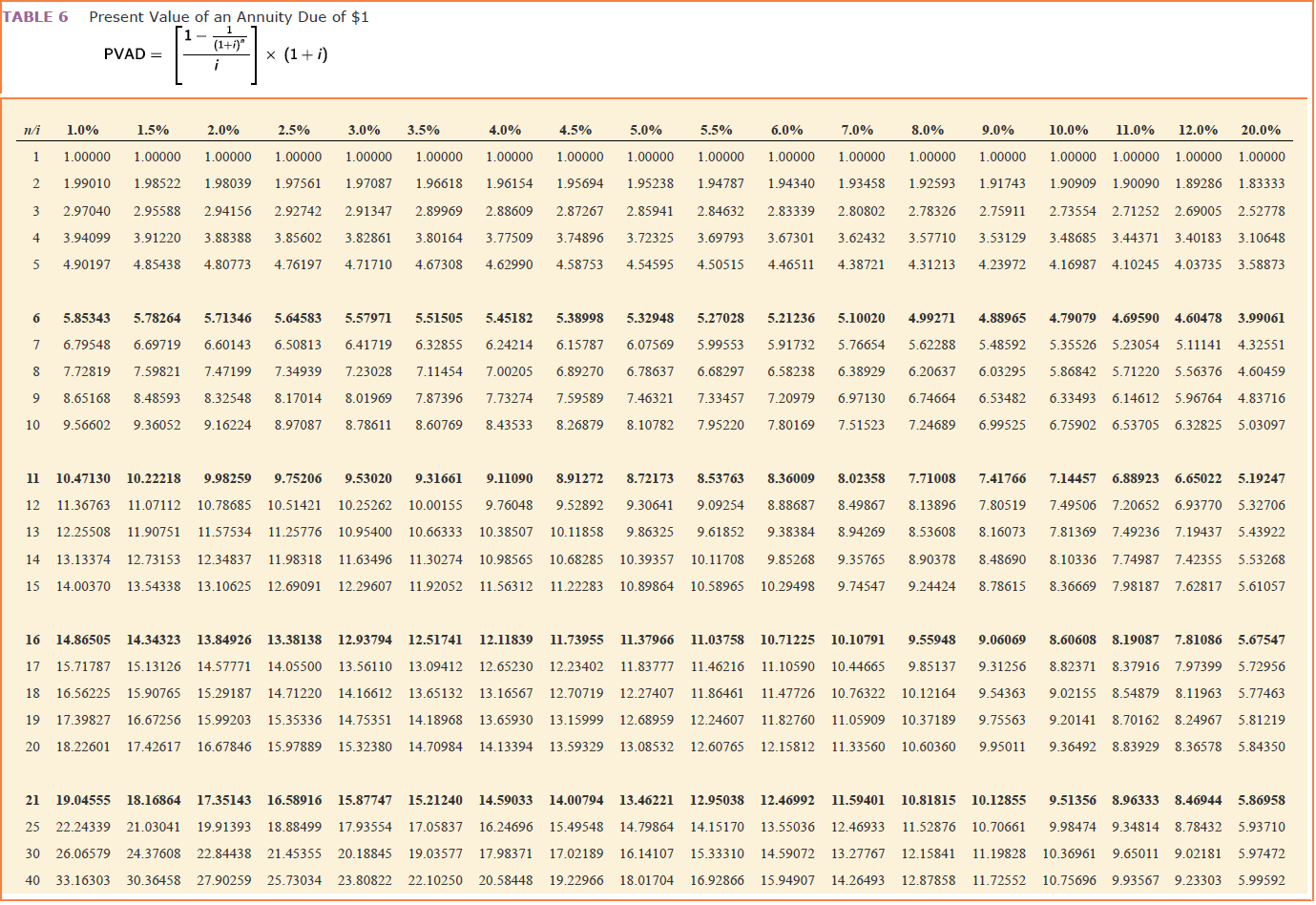
The Thompson Corporation, a manufacturer of steel products, began operations on October 1, 2019. The accounting department of Thompson has started the fixed-asset and depreciation schedule presented below. You have been asked to assist in completing this schedule. In addition to ascertaining that the data already on the schedule are correct, you have obtained the following information from the company's records and personnel: (FV of $1, PV of $1, FVA of $1, PVA of $1, FVAD of $1 and PVAD of $1) (Use appropriate factor(s) from the tables provided.)

  1. Depreciation is computed from the first of the month of acquisition to the first of the month of disposition.
  2. Land A and Building A were acquired from a predecessor corporation. Thompson paid $832,500 for the land and building together. At the time of acquisition, the land had a fair value of $110,400 and the building had a fair value of $809,600.
  3. Land B was acquired on October 2, 2019, in exchange for 3,200 newly issued shares of Thompson’s common stock. At the date of acquisition, the stock had a par value of $5 per share and a fair value of $27 per share. During October 2019, Thompson paid $10,600 to demolish an existing building on this land so it could construct a new building.
  4. Construction of Building B on the newly acquired land began on October 1, 2020. By September 30, 2021, Thompson had paid $230,000 of the estimated total construction costs of $320,000. Estimated completion and occupancy are July 2022.
  5. Certain equipment was donated to the corporation by the city. An independent appraisal of the equipment when donated placed the fair value at $16,800 and the residual value at $2,200.
  6. Equipment A’s total cost of $112,000 includes installation charges of $570 and normal repairs and maintenance of $13,000. Residual value is estimated at $4,500. Equipment A was sold on February 1, 2021.
  7. On October 1, 2020, Equipment B was acquired with a down payment of $4,200 and the remaining payments to be made in 10 annual installments of $4,200 each beginning October 1, 2021. The prevailing interest rate was 7%.

Required:
Supply the correct amount for each answer box on the schedule. (Round your intermediate calculations and final answers to the nearest whole dollar.)

THOMPSON CORPORATION
Fixed Asset and Depreciation Schedule
For Fiscal Years Ended September 30, 2020, and September 30, 2021
Assets Acquisition Date Cost Residual Depreciation Method Estimated Life in Years Depreciation for Year Ended 9/30
2020 2021
Land A 10/1/2019 N/A not applicable N/A N/A N/A
Building A 10/1/2019 $51,000 Straight-line $14,200
Land B 10/2/2019 N/A not applicable N/A N/A N/A
Building B Under construction 230,000 to date Straight-line 30
Donated Equipment 10/2/2019 2,200 200% Declining balance 10
Equipment A 10/2/2019 4,500 Sum-of-the years’-digits 9
Equipment B 10/1/2020 Straight-line 15

In: Accounting

The Thompson Corporation, a manufacturer of steel products, began operations on October 1, 2019. The accounting...

The Thompson Corporation, a manufacturer of steel products, began operations on October 1, 2019. The accounting department of Thompson has started the fixed-asset and depreciation schedule presented below. You have been asked to assist in completing this schedule. In addition to ascertaining that the data already on the schedule are correct, you have obtained the following information from the company's records and personnel: (FV of $1, PV of $1, FVA of $1, PVA of $1, FVAD of $1 and PVAD of $1) (Use appropriate factor(s) from the tables provided.)

  1. Depreciation is computed from the first of the month of acquisition to the first of the month of disposition.
  2. Land A and Building A were acquired from a predecessor corporation. Thompson paid $892,500 for the land and building together. At the time of acquisition, the land had a fair value of $117,600 and the building had a fair value of $862,400.
  3. Land B was acquired on October 2, 2019, in exchange for 3,800 newly issued shares of Thompson’s common stock. At the date of acquisition, the stock had a par value of $5 per share and a fair value of $33 per share. During October 2019, Thompson paid $11,200 to demolish an existing building on this land so it could construct a new building.
  4. Construction of Building B on the newly acquired land began on October 1, 2020. By September 30, 2021, Thompson had paid $290,000 of the estimated total construction costs of $380,000. Estimated completion and occupancy are July 2022.
  5. Certain equipment was donated to the corporation by the city. An independent appraisal of the equipment when donated placed the fair value at $19,200 and the residual value at $2,800.
  6. Equipment A’s total cost of $101,000 includes installation charges of $630 and normal repairs and maintenance of $12,700. Residual value is estimated at $4,600. Equipment A was sold on February 1, 2021.
  7. On October 1, 2020, Equipment B was acquired with a down payment of $4,800 and the remaining payments to be made in 10 annual installments of $4,800 each beginning October 1, 2021. The prevailing interest rate was 7%.


Required:

Supply the correct amount for each answer box on the schedule.
(Round your intermediate calculations and final answers to the nearest whole dollar.)

THOMPSON CORPORATION

Fixed Asset and Depreciation Schedule

For Fiscal Years Ended September 30, 2020, and September 30, 2021

Assets

Acquisition Date

Cost

Residual

Depreciation Method

Estimated Life in Years

Depreciation for Year Ended 9/30

2020

2021

Land A

10/1/2019

N/A

not applicable

N/A

N/A

N/A

Building A

10/1/2019

$75,000

Straight-line

$14,800

Land B

10/2/2019

N/A

not applicable

N/A

N/A

N/A

Building B

Under construction

290,000 to date

Straight-line

30

Donated Equipment

10/2/2019

2,800

200% Declining balance

10

Equipment A

10/2/2019

4,600

Sum-of-the years’-digits

8

Equipment B

10/1/2020

Straight-line

15

In: Accounting

Question text The Chancellor of the California State University System has recently indicated that classes in...

Question text

The Chancellor of the California State University System has recently indicated that classes in the Fall of 2020 will continue to be virtual to be able to cope with the Corona Virus. Assume that all CSULB business students take a student satisfaction survey each semester. A researcher wants to compare compare two random groups of students from Fall 2019 to Fall 2020 in their satisfaction scores. The Chancellor has indicated that student satisfaction will improve with virtual classes. The groups are called FSS2019 for Student Satisfaction scores for Fall, 2020 and FSS202- for Student Satisfaction Scores for Fall, 2020. The study will calculate the difference using a confidence level of 95%. The population standard deviation is known.

The researcher wants to make sure even though they take random samples, they get a group from each of the local community colleges and plans to use Anova to analyze the data. What type of design could ensure this?

Select one:

a. Randomized Block Design

b. Completely Randomized Design

c. Matched Samples

d. Random but Related Sampling

In: Statistics and Probability

Scenario C: SonicStar Inc. requires its job applicants to take a test that measures their vocabulary...

Scenario C: SonicStar Inc. requires its job applicants to take a test that measures their vocabulary and numerical skills. In addition to the written test, for specific jobs the company also requires its applicants to perform a sample of the job. Before implementing the tests, the management analyzes how well the test actually correlates and predicts job performance. When SonicStar Inc. needed to downsize, the company helped employees who were laid off to get placed in other organizations, and immediate supervisors talked to the employees about the reasons for their dismissal. When SonicStar Inc. needed to downsize, the dismissed employees' immediate supervisors discussed the need for downsizing with them. This is an example of a(n) ________.


situational interview


termination interview


behavioral description interview


expatriation


outplacement

In: Other

This passage below require analysis and breakdown Sassan Chakanian was interviewed in 1996 regarding the project...

This passage below require analysis and breakdown


Sassan Chakanian was interviewed in 1996 regarding the project planning and systems that Maxwell Technologies, Inc. offered during this time. According the Williams and Hart (1996) this interview provided a great understanding to the need of job-costing system as this time and even as early as the 1960s. Chakanian provided a great overview in the interview of the origins of Maxwell Technologies focusing primarily on government contracts, geared to defense-related business. This shifted in the 1990s to commercial business and civil industries providing a more “client /server job costing system” (Williams and Hart, 1996). He explains the JAMIS (Job Cost Account and Management Information System) which began in the late 1970s because at the time there was a great need and nothing on the market (Williams and Hart, 1996).
According the Chakanian the need for JAMIS was viable the government needed more sufficient data and finance management and civil business leader such as CFOs could clearly see the job costs without overwhelming the general ledger. He gives a great example of how the system works, the description is very basic, working in present time taking the input of time cards for instance. He explains the simultaneous transactions to both the general ledger and to the job cost module. While the one transaction is needed for both areas the detail that is equated is specific to the need of the bottom line and the cost of that job, as performed by labor hours ( Williams and Hart, 1996). He continues in the interview to explain while they have very specific software selecting the right software for the project is key to desired functionality (Williams and Hart, 1996).
Reaction:
This interview was very helpful for me to better understand where or how job-cost systems were derived. You can see in the 1960s some of technology was or data management was in place, primarily for defense purposes. Then in the late 70s the civil business had a need growing the need for job-costing software. I appreciate the tone of the interview; Chakanian feels this is an important tool, even a necessity for accurate data and financial analysis. The information throughout the interview, explains the product, Maxwell Technologies, Inc, and JAMIS. This is informative and persuasive, however Chakanian clearly reminds us having the right software for the project or job is key to the success of both the project and cost management. I appreciate the format of the article giving some background on the interviewee and the company, it further connect the reader to the service of the organization, not just the business or technology.

critically summarise the passage

In: Operations Management

Dealing a Rigged Game The case study concerns Pete Miller, CEO of National Oilwell Varco (NOV)...

Dealing a Rigged Game

The case study concerns Pete Miller, CEO of National Oilwell Varco (NOV) since 2001. Miller acquired over 200 companies, each with a strategic tie to the oil producing industry. The company now has a dominant share of the market for offshore drilling equipment, a segment of the industry that reported the most orders ever in 2013. NOV stands to capitalize on all segments of the future oil industry – the actual building of the drilling rigs, jack-ups, and ships that have to go offshore and do the drilling.

Management Update: In November 2013, Pete Miller announced he was stepping down as NOV’s CEO to serve as executive chairman of DistributionNOW

Case Question: Recall our definition of strategy as “a comprehensive plan for accomplishing an organization’s goals.” Explain why NOV’s approach to acquisitions qualifies as corporate-level strategy. Be specific by discussing the company’s moves, the nature and state of the industry that it’s in (drilling equipment and services), the nature and state of the industry to which it’s closely related (oil and gas drilling), and, most importantly, its goals. What are NOV’s goals?

In: Operations Management

Each change occurs during 2021 before any adjusting entries or closing entries were prepared. Assume the...

Each change occurs during 2021 before any adjusting entries or closing entries were prepared. Assume the tax rate for each company is 25% in all years. Any tax effects should be adjusted through the deferred tax liability account.

  1. Fleming Home Products introduced a new line of commercial awnings in 2020 that carry a one-year warranty against manufacturer’s defects. Based on industry experience, warranty costs were expected to approximate 2% of sales. Sales of the awnings in 2020 were $2,900,000. Accordingly, warranty expense and a warranty liability of $58,000 were recorded in 2020. In late 2021, the company’s claims experience was evaluated, and it was determined that claims were far fewer than expected: 1% of sales rather than 2%. Sales of the awnings in 2021 were $3,400,000, and warranty expenditures in 2021 totaled $77,350.
  2. On December 30, 2017, Rival Industries acquired its office building at a cost of $880,000. It was depreciated on a straight-line basis assuming a useful life of 40 years and no salvage value. However, plans were finalized in 2021 to relocate the company headquarters at the end of 2025. The vacated office building will have a salvage value at that time of $640,000.
  3. Hobbs-Barto Merchandising, Inc., changed inventory cost methods to LIFO from FIFO at the end of 2021 for both financial statement and income tax purposes. Under FIFO, the inventory at January 1, 2021, is $630,000.
  4. At the beginning of 2018, the Hoffman Group purchased office equipment at a cost of $264,000. Its useful life was estimated to be 10 years with no salvage value. The equipment was depreciated by the sum-of-the-years’-digits method. On January 1, 2021, the company changed to the straight-line method.
  5. In November 2019, the State of Minnesota filed suit against Huggins Manufacturing Company, seeking penalties for violations of clean air laws. When the financial statements were issued in 2020, Huggins had not reached a settlement with state authorities, but legal counsel advised Huggins that it was probable the company would have to pay $140,000 in penalties. Accordingly, the following entry was recorded:
Loss—litigation 140,000
Liability—litigation 140,000


Late in 2021, a settlement was reached with state authorities to pay a total of $284,000 in penalties.

  1. At the beginning of 2021, Jantzen Specialties, which uses the sum-of-the-years’-digits method, changed to the straight-line method for newly acquired buildings and equipment. The change increased current year net earnings by $379,000.


Required:
For each situation:
1. Identify the type of change.
2. Prepare any journal entry necessary as a direct result of the change, as well as any adjusting entry for 2021 related to the situation described.
  

In: Accounting

Chapman Company obtains 100 percent of Abernethy Company’s stock on January 1, 2020. As of that...

Chapman Company obtains 100 percent of Abernethy Company’s stock on January 1, 2020. As of that date, Abernethy has the following trial balance:

Debit Credit
Accounts payable $ 56,700
Accounts receivable $ 43,800
Additional paid-in capital 50,000
Buildings (net) (4-year remaining life) 143,000
Cash and short-term investments 80,250
Common stock 250,000
Equipment (net) (5-year remaining life) 295,000
Inventory 110,500
Land 112,000
Long-term liabilities (mature 12/31/23) 171,000
Retained earnings, 1/1/20 268,750
Supplies 11,900
Totals $ 796,450 $ 796,450

During 2020, Abernethy reported net income of $122,500 while declaring and paying dividends of $15,000. During 2021, Abernethy reported net income of $159,250 while declaring and paying dividends of $49,000.

Assume that Chapman Company acquired Abernethy’s common stock for $698,050 in cash. As of January 1, 2020, Abernethy’s land had a fair value of $123,900, its buildings were valued at $219,400, and its equipment was appraised at $254,500. Chapman uses the equity method for this investment.

Prepare consolidation worksheet entries for December 31, 2020, and December 31, 2021.

In: Accounting
Chapman Company obtains 100 percent of Abernethy Company’s stock on January 1, 2020. As of that...

Chapman Company obtains 100 percent of Abernethy Company’s stock on January 1, 2020. As of that date, Abernethy has the following trial balance: Debit Credit Accounts payable $ 55,800 Accounts receivable $ 42,500 Additional paid-in capital 50,000 Buildings (net) (4-year remaining life) 209,000 Cash and short-term investments 67,250 Common stock 250,000 Equipment (net) (5-year remaining life) 357,500 Inventory 136,000 Land 114,000 Long-term liabilities (mature 12/31/23) 168,500 Retained earnings, 1/1/20 414,650 Supplies 12,700 Totals $ 938,950 $ 938,950 During 2020, Abernethy reported net income of $104,500 while declaring and paying dividends of $13,000. During 2021, Abernethy reported net income of $137,750 while declaring and paying dividends of $34,000. Assume that Chapman Company acquired Abernethy’s common stock for $849,550 in cash. As of January 1, 2020, Abernethy’s land had a fair value of $128,300, its buildings were valued at $274,600, and its equipment was appraised at $334,750. Chapman uses the equity method for this investment. Prepare consolidation worksheet entries for December 31, 2020, and December 31, 2021.

In: Accounting

Chapman Company obtains 100 percent of Abernethy Company’s stock on January 1, 2020. As of that...

Chapman Company obtains 100 percent of Abernethy Company’s stock on January 1, 2020. As of that date, Abernethy has the following trial balance:

Debit Credit
Accounts payable $ 51,900
Accounts receivable $ 43,100
Additional paid-in capital 50,000
Buildings (net) (4-year remaining life) 175,000
Cash and short-term investments 75,500
Common stock 250,000
Equipment (net) (5-year remaining life) 439,500
Inventory 127,000
Land 116,500
Long-term liabilities (mature 12/31/23) 170,500
Retained earnings, 1/1/20 464,900
Supplies 10,700
Totals $ 987,300 $ 987,300

During 2020, Abernethy reported net income of $87,000 while declaring and paying dividends of $11,000. During 2021, Abernethy reported net income of $122,500 while declaring and paying dividends of $55,000.

Assume that Chapman Company acquired Abernethy’s common stock for $873,250 in cash. As of January 1, 2020, Abernethy’s land had a fair value of $129,800, its buildings were valued at $243,800, and its equipment was appraised at $403,750. Chapman uses the equity method for this investment.

Prepare consolidation worksheet entries for December 31, 2020, and December 31, 2021.

In: Accounting